

129 Years: The Complete History of H Bar C Ranchwear

In 1897, a tailor named Samuel Christenfeld opened a shop in Brooklyn, New York. He called it "Tailoring by Christenfeld." He made English riding breeches, structured jackets, luxury clothing with an English riding flair. Garments designed for the saddle.
That shop became H Bar C Ranchwear.
And 129 years later, we are still making clothes.
Brooklyn, 1897 to 1906
Samuel Christenfeld worked out of Brooklyn making fitted riding apparel — the kind of precision tailoring that mattered when your client was actually on a horse. In 1906, he formed a partnership with Mel Halpern. The company became Halpern and Christenfeld.
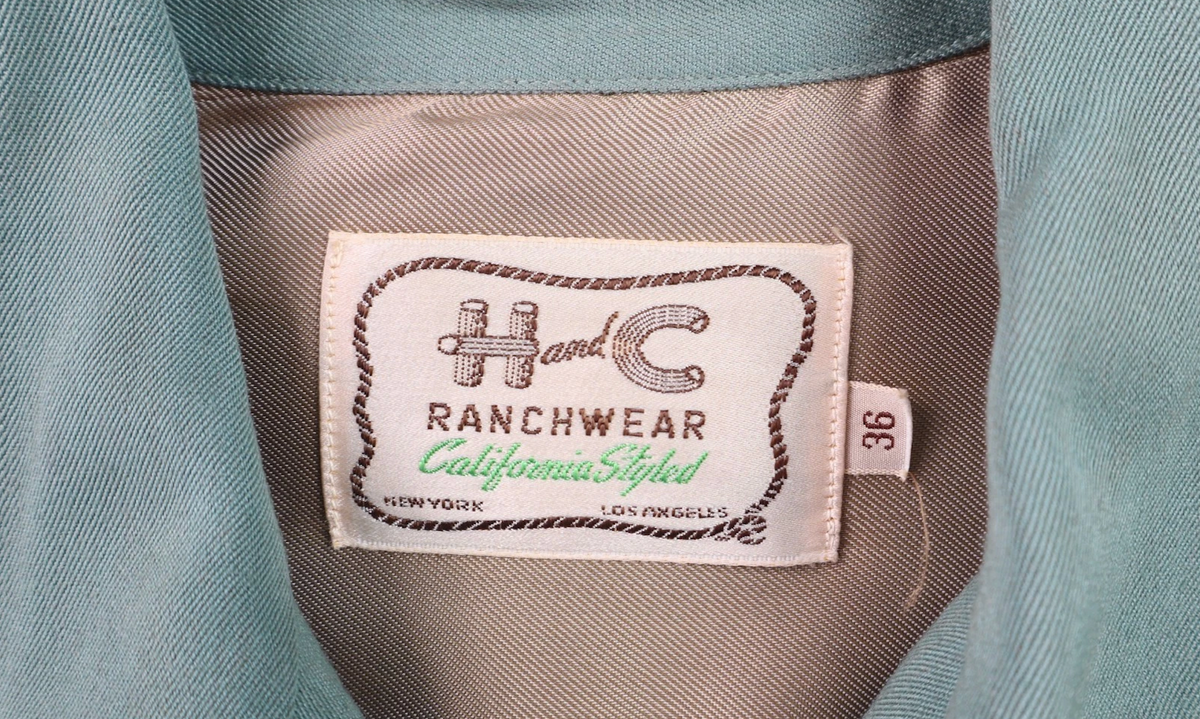
Halpern died in 1929, and Christenfeld took full control of the company. The Halpern & Christenfeld name stayed on the incorporation papers, but the label started shortening — first to H and C, then to H-C. When the company turned toward the West in the mid-1930s, the hyphen became a bar: in cattle-brand language, a letter over a horizontal line is read "bar." A Brooklyn riding-apparel house renamed itself like a ranch brand. Welcome H Bar C.
Samuel ran the company alongside his five sons: Bernard, Seymour, Stanley, Leonard, and Paul.
The Move West

By the early 1930s, Hollywood Westerns had created a real appetite for Western clothing. Samuel saw it. In 1936, the family opened an office in Los Angeles, and the label changed to H Bar C California Ranchwear.
On March 12, 1941, the H Bar C Ranchwear trademark was first used in commerce...a date recorded in the United States Patent and Trademark Office. By then, H Bar C was already producing Western shirts that carried the tailoring precision of Samuel's Brooklyn shop into the functional demands of working cowboys. The Denver shirt, still in the H Bar C line today, dates to 1938. And our Bolero Jacket originally designed in 1936.
H Bar C shirts were not costumes. They were fitted garments built for cowboys working in the saddle. Cropped waist jackets allowed freedom of movement. Fitted sleeves and cuffs kept excess fabric from getting caught or tangled as a cowboy dallied a rope around his saddle horn. The fitted vaquero style came out of purpose, not decoration. That style became the foundation for everything that followed.
Hollywood and the Golden Age
Samuel Christenfeld died in 1939. Seymour Christenfeld took the lead in California and built out the Hollywood side of the business. H Bar C was making authentic Western wear in the middle of the film industry. The work found its way onto the biggest names in the country.

H Bar C supplied clothing for Gene Autry, Roy Rogers, John Wayne, Elvis Presley, and John Travolta. Working partnerships with garments built for screen, for stage, for personal wardrobes. A Gene Autry checkered Western shirt, personally owned and worn, sold through Butterfield and Butterfield's 1989 Gene Autry Collection auction. An Elvis Presley owned and worn Western shirt carrying an H Bar C California Ranchwear label has been cataloged by Gotta Have Rock and Roll.
The Country Music Hall of Fame and Museum holds H Bar C garments in its permanent collection. Tom Petty's favorite vintage Western shirt, made by H Bar C Ranchwear in the 1950s, is displayed in the museum's Tom Petty exhibit. He wore it on tour with Mudcrutch in 2008 and 2016. A 1950s H Bar C still rockin' on stage in 2016.
Nudie Cohn and Manuel Cuevas

As the company expanded its commercial operation, H Bar C recruited Nudie Cohn, the famous Rodeo Tailor, to design shirts for the brand. H Bar C produced some of Nudie's own production lines. Together, they pushed embroidery and appliqué work further than anyone in Western wear had gone, and many of those techniques became new industry standards. During the same time, Wrangler built out its famous denim line by recruiting Rodeo Ben to perfect their denim line.
In 1947, H Bar C contracted Margaret and Frank Miele to handle embroidery production. Margaret did much of the work herself before training others as demand grew.

It was during these years that Nudie worked alongside a young man named Manuel Cuevas. Born in 1933 in Coalcoman, Mexico, Cuevas arrived in Los Angeles in the early 1950s. He worked for Sy Devore, Nathan Turk, and learned embroidery from Viola Grae before joining Nudie as lead designer. Manuel became head designer at Nudie's Rodeo Tailors through the 1960s and 1970s, married Nudie's daughter Barbara in 1965, and opened his own shop in 1975. He is recognized by the National Endowment for the Arts as one of the most important designers of Western clothing in American history.
H Bar C, Nudie Cohn, and Manuel Cuevas. All three connected through the same Los Angeles shops during the same decades. That lineage runs through the DNA of every embroidered Western shirt made since.
The Hiatus
Bernard Christenfeld died in 1982. Seymour carried H Bar C alone after that, directing garment design and manufacturing until his own death in 1996.
By the late 1990s, NAFTA had reshaped the economics of American garment manufacturing. Production in Los Angeles could not hold at the same quality and the same price. H Bar C stopped producing.
While the brand sat dormant, the vintage market picked up where production left off. H Bar C deadstock and lightly used pieces started showing up on eBay, then Etsy, then Poshmark. Collectors were finding shirts from the 1940s and 1950s still in wearable condition. Eighty year old garments, holding up. That said everything about how they were made.
The Relaunch
Before Western wear became popular again, brands like RRL, Tom Ford, Givenchy, and YSL were already pulling from our archive. Western yokes, embroidered panels, snap fronts, rodeo cuffs...showing up on runways and in fall/winter collections. Our designs. Our details. Reproduced without the history behind them.
That is why H Bar C relaunched production. Sick of designers pretending to be Western, we wanted to honor the history western wear was built on. We started building long before the trend arrived.
The mission was specific and advised to us by legendary fashion icon Mordechai Rubinstein: "What ever you do, stay true to the brand". Produce a product the 1940s employees would have been proud of. Reproduce old designs right from the archives. Chainstitch just the way we did. Do not ruin the history and heritage... instead, build a product and company that the people who built it in the early 1900s would be proud of.
The new production uses 100% premium Tencel, a sustainable fabric made from recycled eucalyptus trees. The shirts are made in the USA. The pearl snaps, the smile pockets, the deep Western yokes, the rodeo cuffs...all of it built to the same standard that kept shirts wearable for 80 years.
We did not come back because the market was ready. We came back because the designs were ours.
The Modern Era

H Bar C Ranchwear operates four retail stores: two in Nashville, Tennessee (one in The Arcade on 4th Avenue and one in Marathon Village on Clinton Street) plus locations in Tulsa, Oklahoma and Santa Fe, New Mexico. The brand maintains wholesale relationships across the United States, Korea, Japan, and Europe.
Collaborations include Gibson Guitars, producing the J-200 Tencel collection and the Dove collection inspired by 1960s Laurel Canyon. Tecovas, Rustler Hat Co, and Nashville singer songwriter Boo Ray have all worked with us on limited collections. H Bar C is the presenting sponsor of Culture At Large, the podcast from award winning journalist Marcus K. Dowling, recorded live in Nashville.

In 2023, the H Bar C Taos fringe shirt appeared in the film Barbie, worn by Ryan Gosling as Ken. Gene Autry wore H Bar C in the golden age of Hollywood. Ryan Gosling wore H Bar C in the biggest film of 2023. Nearly 80 years apart. Same brand.
129 Years
We believe, if you make a quality product, people will keep coming back. The industry is starting to figure out that fast fashion does not work. Better fabrics, higher quality production, garments that last. We have been doing that since 1897.